The Internet - The first Worldwide Tool of Unification ("The End of History")

" ... Now I give you something that few think about: What do you think the Internet is all about, historically? Citizens of all the countries on Earth can talk to one another without electronic borders. The young people of those nations can all see each other, talk to each other, and express opinions. No matter what the country does to suppress it, they're doing it anyway. They are putting together a network of consciousness, of oneness, a multicultural consciousness. It's here to stay. It's part of the new energy. The young people know it and are leading the way.... "

" ... I gave you a prophecy more than 10 years ago. I told you there would come a day when everyone could talk to everyone and, therefore, there could be no conspiracy. For conspiracy depends on separation and secrecy - something hiding in the dark that only a few know about. Seen the news lately? What is happening? Could it be that there is a new paradigm happening that seems to go against history?... " Read More …. "The End of History"- Nov 20, 2010 (Kryon channelled by Lee Carroll)

"Recalibration of Free Choice"– Mar 3, 2012 (Kryon Channelling by Lee Carroll) - (Subjects: (Old) Souls, Midpoint on 21-12-2012, Shift of Human Consciousness, Black & White vs. Color, 1 - Spirituality (Religions) shifting, Loose a Pope “soon”, 2 - Humans will change react to drama, 3 - Civilizations/Population on Earth, 4 - Alternate energy sources (Geothermal, Tidal (Paddle wheels), Wind), 5 – Financials Institutes/concepts will change (Integrity – Ethical) , 6 - News/Media/TV to change, 7 – Big Pharmaceutical company will collapse “soon”, (Keep people sick), (Integrity – Ethical) 8 – Wars will be over on Earth, Global Unity, … etc.) - (Text version)

“…5 - Integrity That May Surprise…

Have you seen innovation and invention in the past decade that required thinking out of the box of an old reality? Indeed, you have. I can't tell you what's coming, because you haven't thought of it yet! But the potentials of it are looming large. Let me give you an example, Let us say that 20 years ago, you predicted that there would be something called the Internet on a device you don't really have yet using technology that you can't imagine. You will have full libraries, buildings filled with books, in your hand - a worldwide encyclopedia of everything knowable, with the ability to look it up instantly! Not only that, but that look-up service isn't going to cost a penny! You can call friends and see them on a video screen, and it won't cost a penny! No matter how long you use this service and to what depth you use it, the service itself will be free.

Now, anyone listening to you back then would perhaps have said, "Even if we can believe the technological part, which we think is impossible, everything costs something. There has to be a charge for it! Otherwise, how would they stay in business?" The answer is this: With new invention comes new paradigms of business. You don't know what you don't know, so don't decide in advance what you think is coming based on an old energy world. ..."
(Subjects: Who/What is Kryon ?, Egypt Uprising, Iran/Persia Uprising, Peace in Middle East without Israel actively involved, Muhammad, "Conceptual" Youth Revolution, "Conceptual" Managed Business, Internet, Social Media, News Media, Google, Bankers, Global Unity,..... etc.)


German anti-hate speech group counters Facebook trolls

German anti-hate speech group counters Facebook trolls
Logo No Hate Speech Movement

Bundestag passes law to fine social media companies for not deleting hate speech

Honouring computing’s 1843 visionary, Lady Ada Lovelace. (Design of doodle by Kevin Laughlin)
Showing posts with label Occupy. Show all posts

Sunday, February 26, 2012

Chinese 'netizens' inundate Obama's Google+ page

BBC News, 25 February 2012

Changing China 

Despite China's Great Firewall, internet
 users have been able to reach Barack
Obama's Google+ page
President Obama's page on Google's social network site has been inundated with messages in Chinese after restrictions in China were removed.

Every current topic on Mr Obama's Google+ page attracted hundreds of Chinese comments.

Some contributors made jokes; others said they were occupying the site in the style of western Occupy campaigns.

Google+ is normally blocked in China along with other social media that the authorities deem unacceptable.

Since Google+ was launched in 2011, software known informally as the Great Firewall had appeared to block it within China.

But on 20 February 2012 internet-users in many parts of China found they could gain access to the site - prompting some to suggest occupying it, in a tongue-in-cheek reference to the Occupy Wall Street campaign.

On 24 and 25 February, to the consternation of American readers, every current topic on President Obama's 2012 election campaign page attracted hundreds of comments, apparently from China.

Their exact provenance cannot be verified, but the expressions contributors used were in the style of mainland China and in simplified Chinese.

A few appealed for the liberty of the civil rights activist Chen Guangcheng, who is under house arrest.

Others asked about a recent political intrigue in south-west China, in which one of the country's top policemen, Wang Lijun, spent a day in the US consulate in Chengdu for undisclosed reasons.

But many simply voiced delight at their freedom to speak: they talked about occupying the furniture and bringing snacks and soft drinks.

The White House in Washington has not commented on the upsurge of Chinese interest in President Obama's campaign site.

But it has prompted one poster to suggest that if China ever abandoned its internet restrictions, the United States would have to protect its social media with a Great Firewall of its own.


Related Articles:


Tuesday, January 31, 2012

Wiki leaders on the rise

RNW, 28 January 2012, by Maike Winters

(Graphic: Radio Netherlands Worldwide)
               
Could our new world leaders be one of the young people who camped out as part of the Occupy movement or who fought for their lives during the Arab Spring? All these young people were inspired by the idea of change. Now a new political platform wants to unite people with ideas to bring about reform in the Netherlands. Partij2030 is part of a global trend. 

The man behind the initiative, 33-year-old Joop Hazenberg, has spent years searching for new ways to get society ready for the future. In addition to a pro-European policy and an alternative welfare state, his vision centres on crowdsourcing: a kind of wiki government in which our leaders build on the knowledge of citizens, comparable to how we consult an internet encyclopaedia like Wikipedia.

Trend

As Joop explains, he's not alone in his ambitions:

“This model is already being used in other parts of the world. In the UK, for example, major cutbacks are taking place. The government has asked people to contribute money-saving ideas. It’s a fairly controversial move, but it’s generated no fewer than 200,000 responses.”

He continues: “That’s a list a policy officer could never have come up with. It’s all about utilising society’s collective knowledge. Thanks to internet and social media, that knowledge is very easy to find.”

Paul Lucardie, political scientist at the University of Groningen, sees this as part of an international trend.

“People want to have more of a say; they want change. Just look at how the Pirate Party has become an international movement, enjoying great popularity in Sweden and Germany. The trend is to start something new that can be passed on quickly. Unfortunately, these kinds of initiatives don’t usually last long.”

Time and energy

Lucardie is referring to the Occupy movement. After disenchanted Americans occupied Wall Street in September last year, it wasn’t long before demonstrators had set up tent camps in over 900 cities across the world.

“That sounds impressive, but in the end how many people actually took part? Perhaps 100,000. That’s not much out of a population of six billion. People want change, but unfortunately there’s only a small group with the time and energy to persevere. People are more concerned about keeping their jobs and pensions than genuine government reform.”

The founder of Partij2030 begs to differ. The first public brainstorming session is scheduled for next week. People from all regions and backgrounds have been invited to contribute their thoughts and ideas. The aim is to get a new political movement off the ground.

Radical edge

“A fine initiative, very much geared towards the future,” says Ringo Ossewaarde, associate professor of sociology at the University of Twente. But he believes the plans lack a radical edge. As he sees it, a wiki government is nothing new.

“It has existed for years under the name civic engagement. And it’s worth asking what the quality of a policy created by ordinary citizens will be.”

The younger generation needs to be able to trust in government again, believes Joop Hazenberg. Time Magazine declared 2011 to be the year of the demonstrator. Will 2012 be the year of wiki government?

“No, it’s still too early for that. I hope this year will be a year of unity: uniting groups of campaigners and people with ideas and trying to bring about change together. Bringing people together in this fragmented society. Partij2030 is an experiment, to see whether we can take part in the 2014 elections with a radical reform agenda for the Netherlands.”


Agents of change in Cuba and Yemen

Across the world, people are trying to change political structures. For example, Yoani Sánchez from Cuba has devoted years to writing a blog about Generation Y.

The aim of her writing is to promote freedom of information. She was given the opportunity to interview President Obama, who praised her for giving him a unique insight into the lives of Cubans.

Yoani Sánchez has also received a Prince Claus Award and the International Press Institute’s World Press Freedom Hero Award. In an interview with Radio Netherlands Worldwide, she said:

“If this generation of young people gain access to social networks, all kinds of things will happen. I believe that if we can try things out in a virtual Cuba, our encounters in the real Cuba will be less violent and less traumatic.”

Yemeni journalist and politician Tawakkul Karman is another example. She founded Women Journalists Without Chains, fought for press freedom and set up a news service for mobile phones.

Tawakkul Karman led demonstrations during the Arab revolution. In 2011, she was awarded the Nobel Peace Prize in recognition of her non-violent struggle for the rights of women.


Related Articles:


"The New Paradigm of Reality" Part I/II – Feb 12, 2011 (Kryon channelled by Lee Carroll) (Subjects: Who/What is Kryon ?, Egypt Uprising, Iran/Persia Uprising, Peace in Middle East without Israel actively involved, Muhammad, "Conceptual" Youth Revolution, "Conceptual" Managed Business, InternetSocial Media, News Media, Google, Bankers, Global Unity,..... etc.)

Friday, January 20, 2012

Wiktory? Key sponsors abandon SOPA/PIPA after web blackout

RT.com, 19 January, 2012

AFP Photo / Stan Honda

Opposition to the controversial SOPA/PIPA legislation has caused a major stir among US lawmakers on both sides of the house, with 18 Senators, including seven co-sponsors, turning their backs on the legislation.

The turnaround by Senators who had previously supported the proposed Stop Online Piracy Act (SOPA) and Protect Intellectual Property Act (PIPA), spearheaded by the by movie and music industries, puts the total number of Senators publicly opposing the bill at 25. Another 13 Senators are leaning toward opposition.

The number of Senators openly supporting the bill has dropped to 33. Of the 25 Senators opposing the legislation, 17 are Republicans and eight are Democrats.

The withdrawal of support came in the wake of Wednesday’s Internet blackout.

Politicians who abandoned SOPA as the strike hit include Republicans Marco Rubio, Kelly Ayotte, Roy Blunt, John Boozman, Ben Cardin and Orrin Hatch and Democrat Ben Cardin. Orrin Hatch of Utah announced on his Facebook page that he acknowledges that intellectual property theft is a “real and growing problem” that must be “combated”, but added that he cannot support the PIPA legislation as it currently stands.

“Rushing something with such potential for far-reaching consequences is something I cannot support and that is why I will not only vote against moving the bill forward next week but also remove my co-sponsorship of the bill,” Orrin Hatch said.

He added that legislators should allow time for the both sides in the conflict to come together and “find a reasonable solution”.

Senator Marco Rubio of Florida also posted a message on his Facebook page saying he was in favor of combating piracy but believed doing so must not stifle innovation in a dynamic and open Internet. He urged Senate Majority Leader Harry Reid to abandon his plan to rush the bill to the floor and instead called on Senators to “take more time to address the concerns raised by all sides, and come up with new legislation that addresses Internet piracy while protecting free and open access to the Internet.”

Kelly Ayotte of New Hampshire posted her message on Twitter: “I'm pulling my support bc your concerns deserve consideration before Congress moves fwd.” Missouri Senator Roy Blunt also announced his change of heart via a Tweet: “We can find a solution that will protect lawful content. But this bill is flawed & that's why I'm withdrawing my support.”

The SOPA and PIPA bills are largely viewed as a means to crack down on out-of-the-US websites involved in violating intellectual property legislation.According to supporters of the bills, SOPA and PIPA will help protect jobs in the film and music industries.

In turn, those opposing the legislation, among them Facebook CEO and founder Mark Zuckerberg, believe that it will have irreversible and far-reaching consequences, including for the economy and innovation.

“The Internet is the most powerful tool we have for creating a more open and connected world,” Zuckerberg said on his Facebook page. “We can't let poorly thought out laws get in the way of the Internet's development. Facebook opposes SOPA and PIPA, and we will continue to oppose any laws that will hurt the Internet.”

A number of other popular Internet resources signaled their opposition to the bills on Wednesday, and many joined words and actions.

The Internet’s largest reference tool, Wikipedia, went black for 24 hours to protest the legislation, while Google blacked out its logo in US, directing people to a page where they could sign a petition against the bills. Google said the initiative had gathered some 4.5 million voices.

Related Articles:

Wednesday, January 18, 2012

Wikipedia blackout: 24-hour strike against SOPA, PIPA begins

RT.com, 18 January, 2012, 09:01

Screenshot from http://en.wikipedia.org

The Internet's largest and most popular general reference has gone dark. Wikipedia has joined a protest against something it believes is even darker: passage of the Stop Online Piracy and Protect Intellectual Property Acts.

SOPA and PIPA have not even made it to the Senate floor, but have already caused public outrage. Internet giants such as Google, YouTube, Yahoo, AOL and many others have likened the bills to China-style censorship. The bills, which are perhaps the most controversial pieces of proposed legislation in recent American history, were supposedly written to protect copyrighted material. But most believe the bills would cripple the Internet, effectively killing all websites allowing user-uploaded content, endangering potential whistleblowers and severely damaging online freedom of speech. And amid fears they will lead to unprecedented censorship, many web moguls are trying to take matters into their own digital hands.

Today’s blackout is the biggest act of defiance yet. Wikipedia founder Jimmy Wales said on Twitter that the move “will be wow” and that he hopes “it will melt phone systems in Washington,” before urging followers to spread the word. The world’s 6th most visited website joins Reddit, TwitPic, Mozilla, WordPress and others in their protest – a decision that did not, according to Wikimedia Foundation Executive Director Sue Gardner, come lightly.

Gardner said that “it is the opinion of the English Wikipedia community that both of these bills, if passed, would be devastating to the free and open web. Over the course of the past 72 hours, over 1800 Wikipedians have joined together to discuss proposed actions that the community might wish to take against SOPA and PIPA. This is by far the largest level of participation in a community discussion ever seen on Wikipedia, which illustrates the level of concern that Wikipedians feel about this proposed legislation.”

The press release went on to say that “the overwhelming majority of participants support community action to encourage greater public action in response to these two bills. Of the proposals considered by Wikipedians, those that would result in a 'blackout' of the English Wikipedia, in concert with similar blackouts on other websites opposed to SOPA and PIPA, received the strongest support.”

But while the move is most definitely a grand stand, will it do anything more than force students to do their homework early – and perhaps even reintroduce printed reference sources to the digital generation?

It might. The Obama Administration responded to an anti-SOPA and PIPA petition, claiming it “will not support legislation that reduces freedom of expression, increases cybersecurity risk, or undermines the dynamic, innovative global Internet.”

Which was taken by most to mean that these bills will never see life as laws, because all of the above is exactly what SOPA and PIPA do. But has that really ever stopped the US government from pushing through legislation deemed “important”? Look at the Department of Homeland Security's “See something, Say something” program, under which almost any action – including paying cash, buying waterproof matches and having discreet phone conversations in public – can be seen as potential terrorist activity. Look at the NDAA, which allows indefinite detention of anyone, including American citizens, suspected of terrorist activity.

So if you’re sitting there reading this, with some cash in your pocket and a website where someone may have posted something that may lead to something else that is potentially suspicious – expect the might of the US security and legal systems to knock – or bust through your door. They might not even have a warrant, having convenient access to the so-called ‘sneak-and-peak’ granted by the Patriot Act. Of course, those were also created to capture terrorists, but as we’ve established, we may all soon be branded as such because of a YouTube search.

Jokes aside, though – what about the arguments used to push the bill forward? Surely copyright infringement should be battled? And shouldn't the companies losing money everywhere because of pirated content be protected?

They should. But what SOPA and PIPA opponents are so upset about is that the bills are not specific enough; that they’re heaping all Internet users together and branding them as one step short of evil, instead of clearly defining what constitutes an illegal activity and how it can realistically be battled.

For now, however, most, including www.demandprogress.org founder and executive director Aaron Swartz, believe the Acts will change the rules for the Internet not just in the United States, but around the world.

“Under this bill, the rules totally change. It makes everyone who runs a website into a policeman. And if they don’t do their job of making sure nobody on their site uses it for anything that’s even potentially illegal, the entire site could get shut down – without even so much as a trial,” Swartz says.

So before the Acts become final, those in favor of an open information pool for the people are trying to make their final act count.

Katerina Azarova, RT

Thursday, November 24, 2011

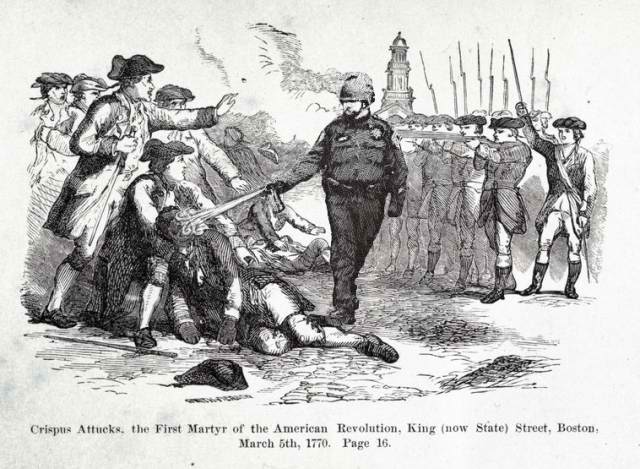
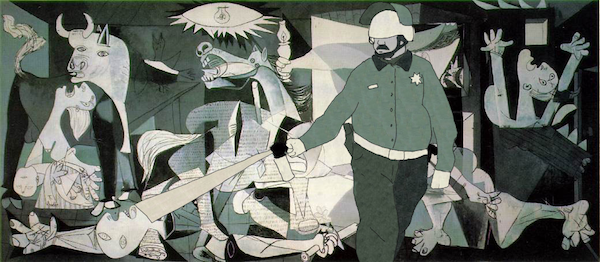
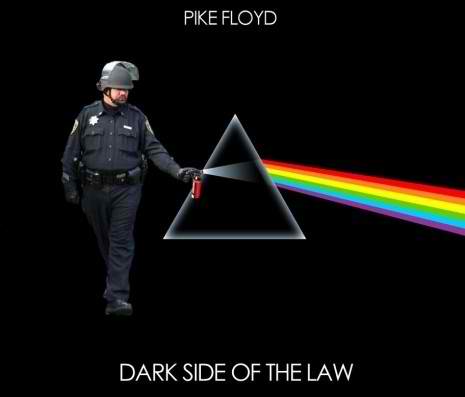
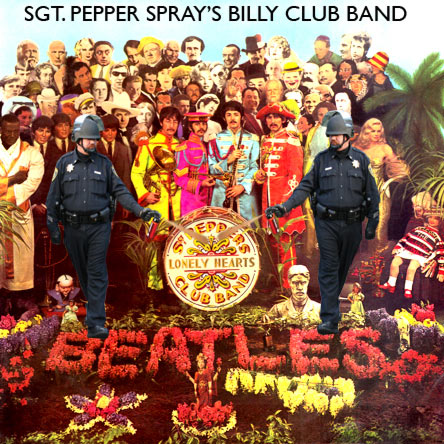
The pepper-spraying cop gets Photoshop justice

The casual way a policeman pepper-sprayed protesting students at UC Davis has caused outrage but also a mocking response

guardian.co.uk, Xeni Jardin, Wednesday 23 November 2011

Police lieutenant John Pike pepper sprays students at UC Davis.
Photograph: Brian Nguyen/Reuters

Nature abhors a vacuum, it is said; and the internet abhors unexplained dissonance. When photographs emerged of police lieutenant John Pike pepper-spraying University of California Davis students, it wasn't just the violence in those images that captured the world's attention – it was the surreal juxtaposition of that violence with Pike's oddly casual body language and facial expression. 

Picture: Lalo Alcaraz/laloalcaraz.com
Photoshop out the students from that picture with your mind. Forget about Pike's uniform, let's say he's just wearing street clothes. Now, instead of a policeman spraying a less-lethal chemical weapon down the throats of peacefully seated 20-year-olds, you might be able to interpret this tableau as a figure sauntering through a garden, spraying weeds. Or maybe he's your paunchy, moustached uncle, nonchalantly dousing bugs in the basement with insecticide.

One way the internet deals with that kind of upsetting dissonance is to mock it. And that's what the internet has done with Pike. The "casually pepper-spraying cop" is now a meme, a kind of folk art or shared visual joke that is open to sharing and reinterpretation by anyone. This particular meme has spread with unusual velocity – in part, I imagine, because the subject matter is just as weird as it is upsetting.

Even Kamran Loghman, one of the men who developed pepper spray as a weapon with the FBI in the 1980s, had a hard time reconciling it. "I have never seen such an inappropriate and improper use of chemical agents," Loghman told the New York Times. And Loghman might add "insouciant" to that list of adjectives. I mean, look at the guy. He's not braced for imminent attack by a foe; he does not move with tension as if navigating a hostile environment. He's administering punishment, and his face says: "Meh."

An investigation, to be led by former NY and LA police chief Bill Bratton, into whether there was police misconduct may take a while to reach a conclusion, but Photoshop justice has been delivered to Pike. And the expressions keep multiplying.

You can find them at Boing Boing's "Occupy Lulz" post, at Know Your Meme, at a Facebook page and at Reddit.

Pike's dissonantly casual body language in the context of violence brings to mind the photos from Abu Ghraib; Lynndie England smiling and giving the camera a thumbs-up in front of tortured prisoners. And, in a fit of macabre recursion, some of the casually pepper-spraying cop meme images reference those very photos from Abu Ghraib. Lynndie and Pike, two "bad apples" taking the fall for systemic problems with the institutions each represent.

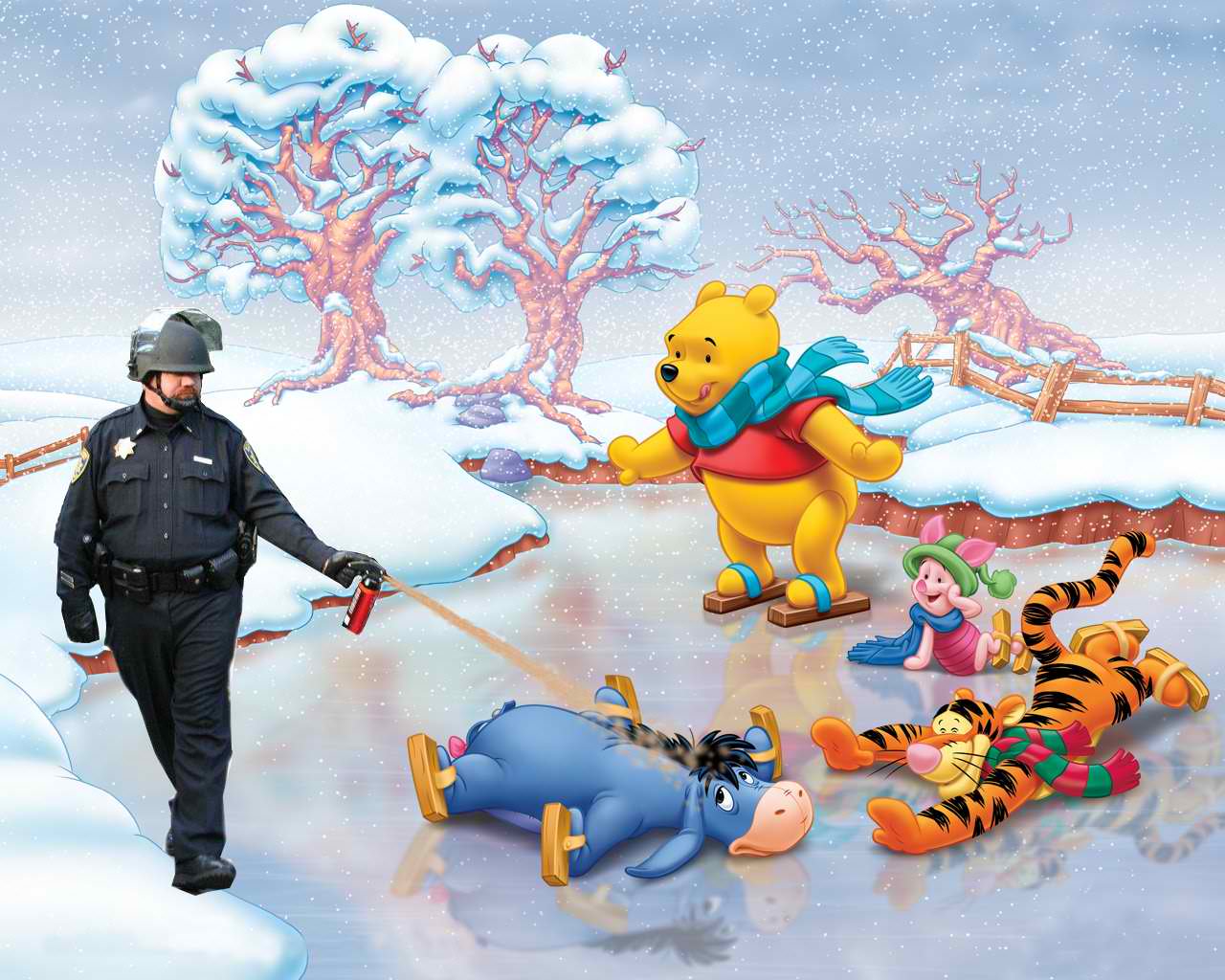
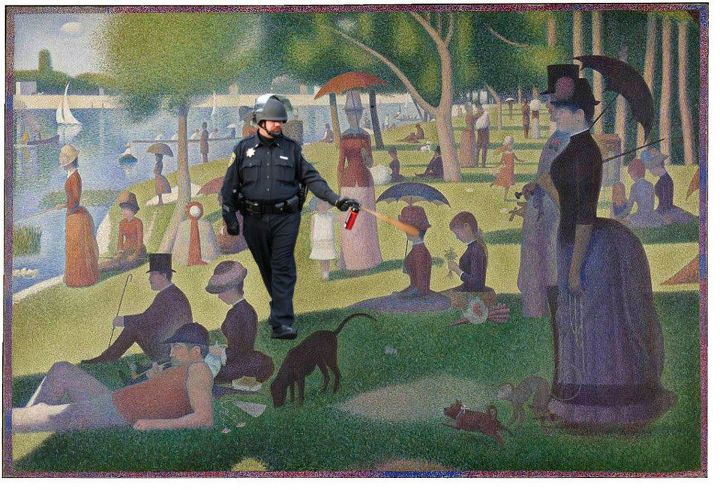
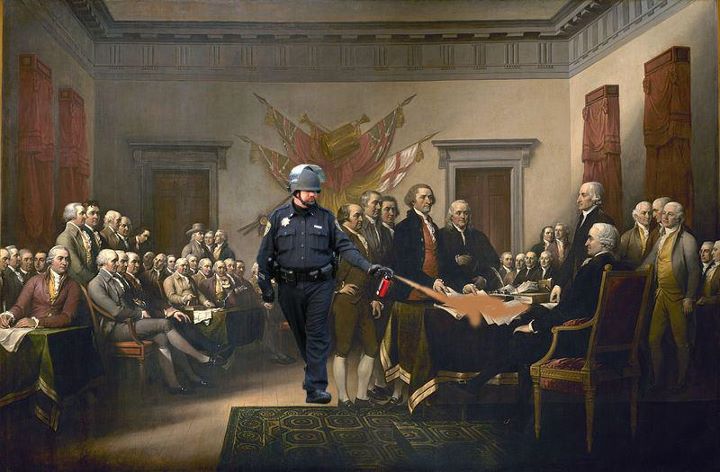
Violence is nothing new, of course, and there are plenty of classic art and history images in which to insert Pike. A print of American revolutionary war figure Crispus Attucks, Picasso's Guernica for instance.

Classic album covers like Pink Floyd's Dark Side of the Moon and the Beatles' Sgt Pepper's Lonely Hearts Club Band get the treatment, too.

Pop culture and fine art images in which sympathetic figures are seated, supine or vulnerable are another frequently spotted base for Pike's shenanagins. Grandma at the holiday table is going to have some extra pepper on her turkey this Thanksgiving. Eeyore is not safe. Nor are the ladies of Seurat. And forget about the American constitution.

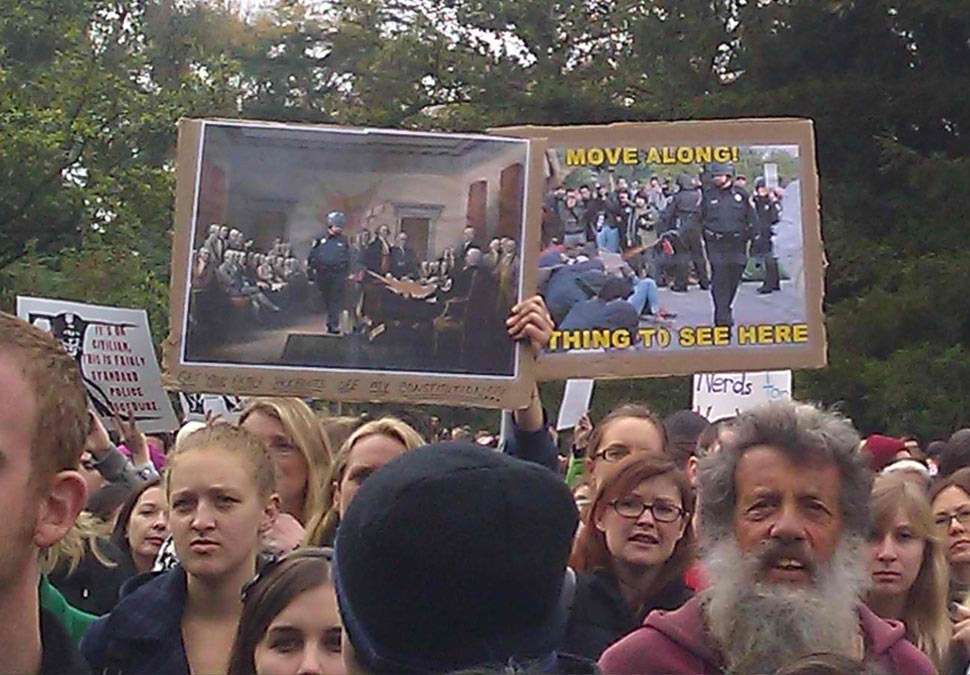
Still, none of us jaded internet chroniclers were prepared for the ultimate act of Inception-like recursion that came this week, when students at UC Davis printed out some of the meme images as posters, and carried them to a protest at the very site on the UC Davis quad where the pepper-spraying incident took place. Images of the casually-pepper-spray-everything-cop, held up as an act of protest on the same spot where Pike casually-pepper-sprayed-everyone. Good news: looks like there will be T-shirts for them to wear soon, too.


Related Article:


Thursday, October 27, 2011

Google: US law enforcement tried to get videos removed from YouTube

The technology giant's biannual transparency report reveals a 70% rise in takedown requests from US government or police 

guardian.co.uk, Josh Halliday, Tuesday 25 October 2011 

Google office. Photograph: Walter Bieri/AP

Google faced down demands from a US law enforcement agency to take down YouTube videos allegedly showing police brutality earlier this year, figures released for the first time show.

The technology giant's biannual transparency report shows that Google refused the demands from the unnamed authority in the first half of this year.

According to the report, Google separately declined orders by other police authorities to remove videos that allegedly defamed law enforcement officials.

The demands formed part of a 70% rise in takedown requests from the US government or police, and were revealed as part of an effort to highlight online censorship around the world.

Figures revealed for the first time show that the US demanded private information about more than 11,000 Google users between January and June this year, almost equal to the number of requests made by 25 other developed countries, including the UK and Russia.

Governments around the world requested private data about 25,440 people in the first half of this year, with 11,057 of those people in the US.

It is the first time Google has released details about how many of its users are targeted by authorities, as opposed to the number of requests made by countries.

"For the first time, we're not only disclosing the number of requests for user data, but we're showing the number of users or accounts that are specified in those requests too," said Dorothy Chou, a senior policy analyst at Google.

"We believe that providing this level of detail highlights the need to modernize laws like the Electronic Communications Privacy Act, which regulates government access to user information and was written 25 years ago—long before the average person had ever heard of email."

Brazil made the most content removal requests in the first half of this year, according to the report, followed by Germany, the US and South Korea.


Related Article:


United States Marine Corps. Sgt. Shamar Thomas from Roosevelt, NY went toe to toe with the New York Police Department. An activist in the Occupy Wall Street movement, Thomas voiced his opinions of the NYPD police brutality that had and has been plaguing the #OWS movement. 

Thomas is a 24-year-old Marine Veteran (2 tours in Iraq), he currently plays amateur football and is in college.

Thomas comes from a long line of people who sacrifice for their country: Mother, Army Veteran (Iraq), Step father, Army, active duty (Afghanistan), Grand father, Air Force veteran (Vietnam), Great Grand Father Navy veteran (World War II).


YouTube footage of protesters being pepper-sprayed

Tuesday, October 18, 2011

From a single hashtag, a protest circled the world

Reuters, by Ben Berkowitz, NEW YORK, Mon Oct 17, 2011

Occupy Wall Street protesters meditate while a sign bearing their twitter
 handle hangs from a railing in Zuccotti Park in New York October 1, 2011. 
(Credit: Reuters/Jessica Rinaldi)

(Reuters) - It all started innocuously enough with a July 13 blog post urging people to #OccupyWallStreet, as though such a thing (Twitter hashtag and all) were possible.

It turns out, with enough momentum and a keen sense of how to use social media, it actually is.

The Occupy movement, decentralized and leaderless, has mobilized thousands of people around the world almost exclusively via the Internet. To a large degree through Twitter, and also with platforms like Facebook and Meetup, crowds have connected and gathered.

As with any movement, a spark is needed to start word spreading. SocialFlow, a social media marketing company, did an analysis for Reuters of the history of the Occupy hashtag on Twitter and the ways it spread and took root.

The first apparent mention was that July 13 blog post by activist group Adbusters (r.reuters.com/suc54s) but the idea was slow to get traction.

The next Twitter mention was on July 20 (r.reuters.com/tuc54s) from a Costa Rican film producer named Francisco Guerrero, linking to a blog post on a site called Wake Up from Your Slumber that reiterated the Adbusters call to action (r.reuters.com/vuc54s).

The site, founded in 2006 "to expose America's fraudulent monetary system and the evil of charging interest on money loaned," is a reference to the biblical verse Romans 13:11 that reads in part: "The hour has come for you to wake up from your slumber, because our salvation is nearer now than when we first believed."

Guerrero's post was retweeted once and then there was silence until two July 23 tweets -- one from the Spanish user Gurzbo (r.reuters.com/wuc54s) and one from a retired high school chemistry teacher in Long Island, New York named Cindy tweeting as gemswinc. (r.reuters.com/xuc54s)

Gurzbo's post was not passed along by anyone but Cindy's was, by eight people, including a Delaware-based opponent of the Federal Reserve, a vegan information rights supporter, a Washington-based environmentalist and an Alabama-based progressive blogger.

Again, there was relative silence for nearly two weeks, until LazyBookworm tweeted the Occupy hashtag again on August 5. (r.reuters.com/zuc54s) That got seven retweets, largely from a crowd of organic food supporters and poets.

HASHTAG REVOLT

The notion of Occupy Wall Street was out there but it was not gaining much attention -- until, of course, it did, suddenly and with force.

Social media experts trace the expansion to hyper-local tweeters, people who cover the pulse of communities at a level of detail not even local papers can match.

In New York, credit goes to the Twitter account of Newyorkist, whose more than 11,000 tweets chronicle the city in block-by-block detail. His was one of the first well-followed accounts to mention the protests in mid-September.

Trendistic, which tracks hashtag trends on Twitter, shows that OccupyWallStreet first showed up in any volume around 11 p.m. on September 16, the evening before the occupation of lower Manhattan's Zuccotti Park began. Within 24 hours, the tag represented nearly 1 of every 500 uses of a hashtag.

The first two weeks of the movement were slow, media coverage was slim and little happened beyond the taking of the concrete park itself. But then a demonstration on the Brooklyn Bridge prompted hundreds of arrests and the spark was ignited.

On October 1, #OccupyBoston started to show up on Twitter. Within a couple of weeks, #OccupyDenver and #OccupySD and others appeared.

The Occupy Wall Street page on Facebook started on September 19 with a YouTube video of the early protests. By September 22, it reached critical mass.

"Newcomers today, welcome! Feel free to post. Advertise your own pages of resistance. Network until it works," read one posting meant to inspire protests elsewhere.

For young activists around the world, who grew up with the Internet and the smartphone, Facebook and Twitter have become crucial in expanding the movement.

They are pioneering platforms like Vibe that lets people anonymously share text, photos and video over short distances for brief periods of time -- perfect for use at rallies.

"No one owns a (Twitter) hashtag, it has no leadership, it has no organization, it has no creed but it's quite appropriate to the architecture of the net. This is a distributed revolt," said Jeff Jarvis, a journalism professor at City University of New York and author of the well-known blog BuzzMachine.

Some reports say the protesters have raised as much as $300,000 in donations to cover everything from pizza to video equipment but others put the figure much lower.

The Alliance for Global Justice, which calls itself "the fiscal sponsor for Occupy Wall Street," has raised $23,200 via WePay.com.

OCCUPY EVERYWHERE

As of Monday afternoon, Facebook listed no fewer than 125 Occupy-related pages, from New York to Tulsa and all points in between. Roughly 1 in every 500 hashtags used on Twitter on Monday, all around the world, was the movement's own #OWS.

The websites keep proliferating -- We Are the 99 Percent, Parents for Occupy Wall Street and Occupy Together, even the parody Occupy Sesame Street (concerned mostly with the plight of monsters living in garbage cans).

Online streaming video has also been a huge resource for the protesters, using cheap cameras and high-speed wireless Internet access.

Supporters, opponents and the merely curious got the chance last Saturday to watch the Occupy Wall Street protesters decide whether to occupy a major public park, Washington Square Park, in the Greenwich Village area.

They saw warnings the police were about to arrive in riot gear and with horses, vans and buses to take away protesters if there were mass arrests. Local media reported about 10 arrests among the 3,000 or so people in the park.

As the seconds to a possible confrontation ticked down, the tension led to various reactions from those watching online.

"Anyone arrested is a political prisoner," said one.

"Here comes Czar Bloomberg's Cossacks," said another, in reference to New York Mayor Mike Bloomberg and the appearance of the mounted police.

There were "we are watching" messages of support from cities across the United States and some who found it the best entertainment going on a Saturday night.

"So much more exciting than a TV show" was one comment.

(Reporting by Ben Berkowitz; Additional reporting by Martin Howell and Anthony DeRosa in New York; Editing by John O'Callaghan)


Monday, October 10, 2011

‘Occupy Wall Street’ Protesters Spread to the Web

Jakarta Globe, Jennifer Preston, October 09, 2011

A demonstrator lies on the ground at an entrance to the National Air
 and Space Museum in Washington after police pepper-sprayed a
 group of protestors trying to get into the museum on Saturday.
(AP Photo/Jose Luis Magana) 
    
Related articles

New York. What began as a small group of protesters expressing their grievances about economic inequities last month from a park in New York City has evolved into an online conversation that is spreading across the country on social media platforms.

Inspired by the populist message of the group known as Occupy Wall Street, more than 200 Facebook pages and Twitter accounts have sprung up in dozens of cities during the past week, seeking volunteers for local protests and fostering discussion about the group’s concerns.

Some 900 events have been set up on Meetup.com, and blog posts and photographs from all over the country are popping up on the WeArethe99Percent blog on Tumblr from people who see themselves as victims of not just a sagging economy but also economic injustice.

‘’I don’t want to be rich. I don’t want to live a lavish lifestyle,” a woman wrote on Tumblr, describing herself as a college student worried about the burden of student debt. “I’m worried. I’m scared, thinking about the future shakes me. I hope this works. I really hope this works.”

The online conversation has grown at the same time that street protests took place in several other cities last week, including Boston, Los Angeles, Chicago and Washington. The Web site Occupy Together is trying to aggregate the online conversations and the offline activities.

“We are not coordinating anything,” said Justin Wedes, 26, a former high school science teacher from Brooklyn who helps manage one of the movement’s main Twitter accounts, @OccupyWallStNYC. “It is all grassroots. We are just trying to use it to disseminate information, tell stories, ask for donations and to give people a voice.”

To help get the word out about a rally at 3 p.m. on Saturday in Washington Square Park, the group turned to its Facebook and Twitter accounts. “If you are one of the 99 percent, this is your meeting,” the Facebook invitation said. Nearly 700 people replied on Facebook saying that they would be there.

More than 1,000 demonstrators arrived at Washington Square Park for the rally, many of them after marching from the encampment they had established three weeks ago in Zuccotti Park, in Lower Manhattan.

During their march, protesters kept to the sidewalks and out of traffic in a purposeful attempt to prevent arrests. Once there, they held meetings until the early evening, when the crowd dispersed and protesters made their way back to Zuccotti Park, where they were welcomed with loud cheers.

While people in New York are still dominating the conversation on Twitter, an analysis of the micro-blogging site’s data on Friday showed that almost half of the posts were made in other parts of the country, primarily in Los Angeles and San Francisco, Chicago and Washington, as well as Texas, Florida and Oregon, according Trendrr, a social media analytics firm.

Mark Ghuneim, founder and chief executive officer of Trendrr, said the Twitter conversation was producing an average of 10,000 to 15,000 posts an hour Friday about Occupy Wall Street, with most people sharing links from news sites, Tumblr, YouTube and Trendsmap.

Washington’s National Air and Space Museum was closed after demonstrators tried to enter the building with signs.

“This is more of a growing conversation than something massive as we have seen from hurricanes and with people passing away,” Ghuneim said. “The conversation for this has a strong and steady heartbeat that is spreading. We’re seeing the national dialogue morph into pockets of local and topic-based conversation.”

In Egypt, the We Are All Khaled Said Facebook page was started 10 months before the uprising in January to protest police brutality. The page had more than 400,000 members before it was used to help propel protesters into Tahrir Square. Occupy Wall Street’s Facebook page began a few weeks ago and has 138,000 members.

Yet it represents only a sliver of the conversation taking place on Facebook about the group’s anti-corporate message. Unlike in Egypt, where people found one another on one Facebook page, geographically based Occupy Facebook pages have cropped up, reflecting the loosely organized approach of the group. These Occupy pages are being used not only to echo the issues being discussed in New York about jobs, corporate greed and budget cuts, but also to talk about other problems closer to home.

In Tennessee, for example, there is an Occupy Tennessee Facebook page, as well as pages for Occupy Memphis, Occupy Knoxville, Occupy Clarksville, Occupy Chattanooga, Occupy Murfreesboro and Occupy Nashville, which helped get out the word about a lunchtime protest in Nashville’s Legislative Plaza on Friday that drew several hundred protesters with some bearing signs with the movement’s motto: “We are the 99 percent.”

The center of the movement’s media operation is in Zuccotti Park in Lower Manhattan, where several hundred people have been camping since Sept. 17.